
"But Did You Die?"
On trauma, rural life, and Graham Platner


"Media are making a very big deal of this, so.…": thus began a progressive of my acquaintance, explaining why he was so worried that revelations about a certain larger-than-life charismatic Democratic politician engaging in illicit but consensual sexual activity might spell the the end of his political career.
Man, do I hate the tropes about “historical parallels,” about historical periods “rhyming” with one another, about time as “flat circle” (I do not know what that means); still and all, sometimes I picture Will Smith and Tommy Lee Jones’s characters in Men in Black must be wandering around zapping folks out of their ability to remember the most relevant incidents in America’s recent political past. For my research for The Infernal Triangle, I counted that the New York Times ran 2,576 articles on Whitewater between the original piece by Jeff Gerth introducing the alleged Clinton scandal, on March 8, 1992, and the end of Clinton’s presidency. The American Journalism Review estimated that between 80 to 90% of what there ever was to know about Whitewater was contained in Jeff Gerth's first article; what the 10-20% remainder added up to was, in fact, that the Clintons were the scandal’s victims. But the media, yes, made a very. big deal of it; then, immediately thereupon, made a much, much bigger deal out of Monicagate. For example, a few years later, after 9/11, a liberal Newsweek columnist named Jonathan Alter avidly endorsed the torture of terrorist suspects, many of whom, in the fullness of time, ended up entirely innocent. Then, he endorsed a war in Iraq built on lies. Bill Clinton’s sexual peccadilloes, on the other hand: those, he could not abide, because they “made it virtually impossible to talk to your kids about the American presidency.”
Alter’s opinion was the typical one back then among agenda-setting elite political journalists. A woman named Sally Quinn used to serve as their semi-official society columnist, in the newspaper her husband Ben Bradlee edited, The Washington Post. The day before the 1998 Congressional elections, for an article that appeared on the front page of the Post Style section, she quoted a passel of them : “He came in here and he trashed the place. And it’s not his place.” “It’s a canard that it’s a private matter. It’s had a profound effect on government.” “I approach this as a mother.” Concluded Quinn, “Privately, many in the Establishment would like to see Bill Clinton resign and spare the country, the presidency, and the city any more humiliation.”
This was misinformation. “The Establishment” wasn’t harboring this opinion “privately.” They expressed it live, on camera, from “the interiors of many attractive summer houses,'“ as Joan Didion archly observed. The conventional wisdom was that Clinton was now unfit to be president. This judgement was rooted in shame—Clinton was “humiliating” the nation, the presidency, “the city”—but came to be expressed in a knowing performance of political wisdom: that, as Clinton’s own former chief of staff Leon Panetta said in a piece from the Los Angeles Times’s Chief Washington correspondent, this “drip-drip” of scandal “exacted so high price “in terms of his ability to lead the country,” that the president really ought to resign before political momentum forced him to it.
Then, the day after Sally Quinn’s article appeared, with President Clinton’s approval rating hovering around 70%, We, the people spoke—granting Clinton’s Democrats a congressional landslide. At which the would-be agenda-setters uncorked fusillades of rage. A typical one came from someone who is now a leading never-Trump Republican. She thundered that the election result “casts shame upon the entire country,” which “seems complicit now because they aren’t rising up in righteous indignation.” This “inability to understand why”—again, Joan Didion’s words—”American might favor the person who had engaged over a common sexual act over the person who had elicited the details of that act as evidence for a public stoning” was evidence that people like these were unfitted to perform a key aspect of their job: explaining America to Americans.
I’ve been thinking a lot about that apparently forgotten chapter in the story of how America got this way while watching the political panic over revelations that Maine Democratic Senate nominee Graham Platner carried on intimate online conversations with as many as a dozen women, not very long ago, and not long after marrying his wife. I respect those who say they cannot support him because of this, and because of his Nazi tattoo and the way he handled those revelations. That is a matter for each individual conscience to decide; and, if you live in Maine, for each individual voter to decide. I’m more interested in those nesting their indignation inside that selfsame performance of political wisdom as those in 1998: in the claim that this latest revelation will break Platner’s political back, or that “the next shoe to drop” will, and proves why he was such an unwise choice to win a Senate general election in the first place.
**
Readers of this page know I’ve spending most of the last several months living in my cabin in a rural county in Illinois. It’s been a particularly illuminating place to observe this story unfold, because it’s provided a powerful reminder of the scandalously narrow sociological ambit of the people who do that job of explaining America to Americans from perches in New York and Washington DC. Their judgement that Platner might be cooked is not political wisdom speaking. It is sociological bias.
Such people, and many ordinary observers too, seem shocked to see their theories disappointed—that the Maine electorate could now be expected now to rear up in righteous indignation against Platner’s sins. But theory must built upon evidence. And as yet, we have no such evidence that the Maine electorate cares much about any of these sins. “I want a senator, not a saint,” one voter told a reporter on the ground, speaking for all the Mainers he spoke to.
Well, why?
**
Veterans suffering PTSD, acting out in dramatic, dark, and even dangerous ways, is a fact of life in parts like these: something baked into the culture. Here’s some swag you could buy at a gun show I looked in on last month in Princeton, Illinois:
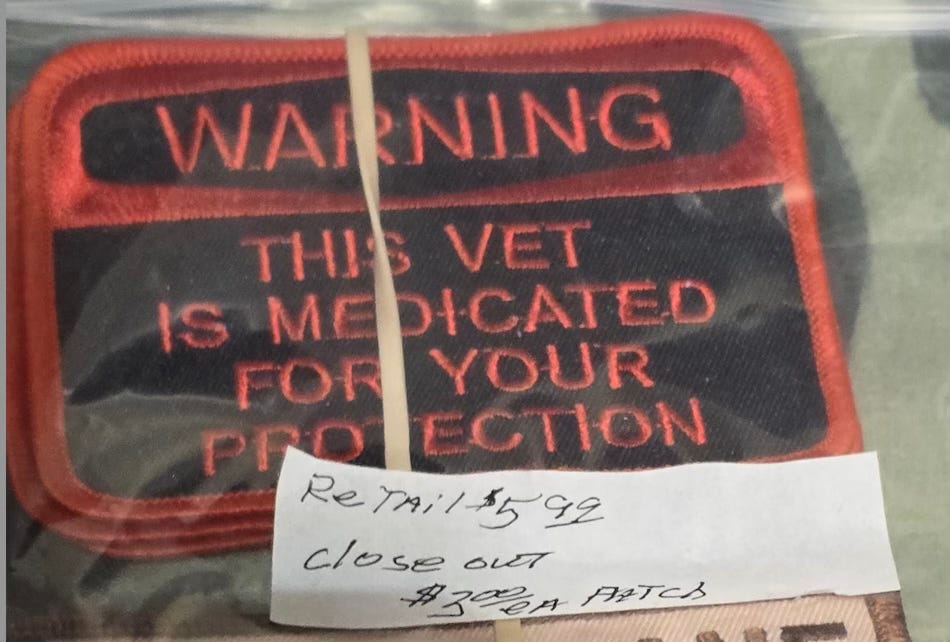


“But did you die?”: think of that, sown on a leather biker jacket, as public avowal from one veteran to another, that..life goes on. That you are going to be…okay. One day at a time.
Stuff like this is the flip side of the sentimental avowals—you saw it everywhere out at my rural keep last Memorial Day Weekend—that if you love freedom you should thank a soldier, and that America is “the home of the free, because of the brave.” It also attests to high degree of grace such folks are afforded by their neighbors.
Also that, sure, traumatized veterans do crazy shit, and that everyone knows it. Everyone! It’s not like it’s a secret.
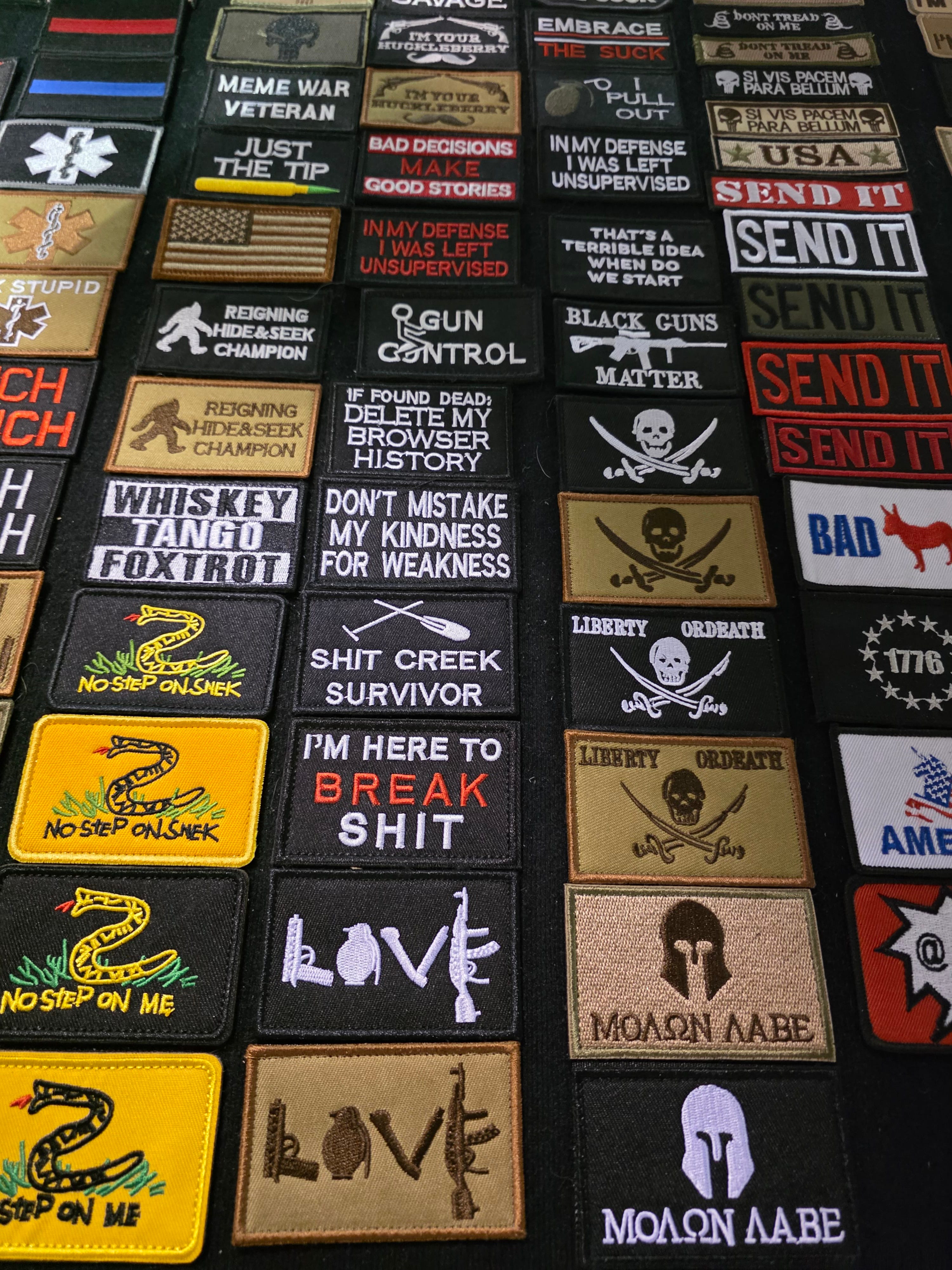
If you live in a place like this—you love veterans. Because, well, you love freedom. That conviction—that ideology—is, veritably, one of the cornerstones of community in rural places that don’t have much else to celebrate: where the sign as you drive into town will advertise the population, and also a girl from there was runner-up in the high school discus state championship. Places like Graham Platner’s hometown, which announces itself (thank you to Max Read for the late-breaking editorial intervention) to the world thus:
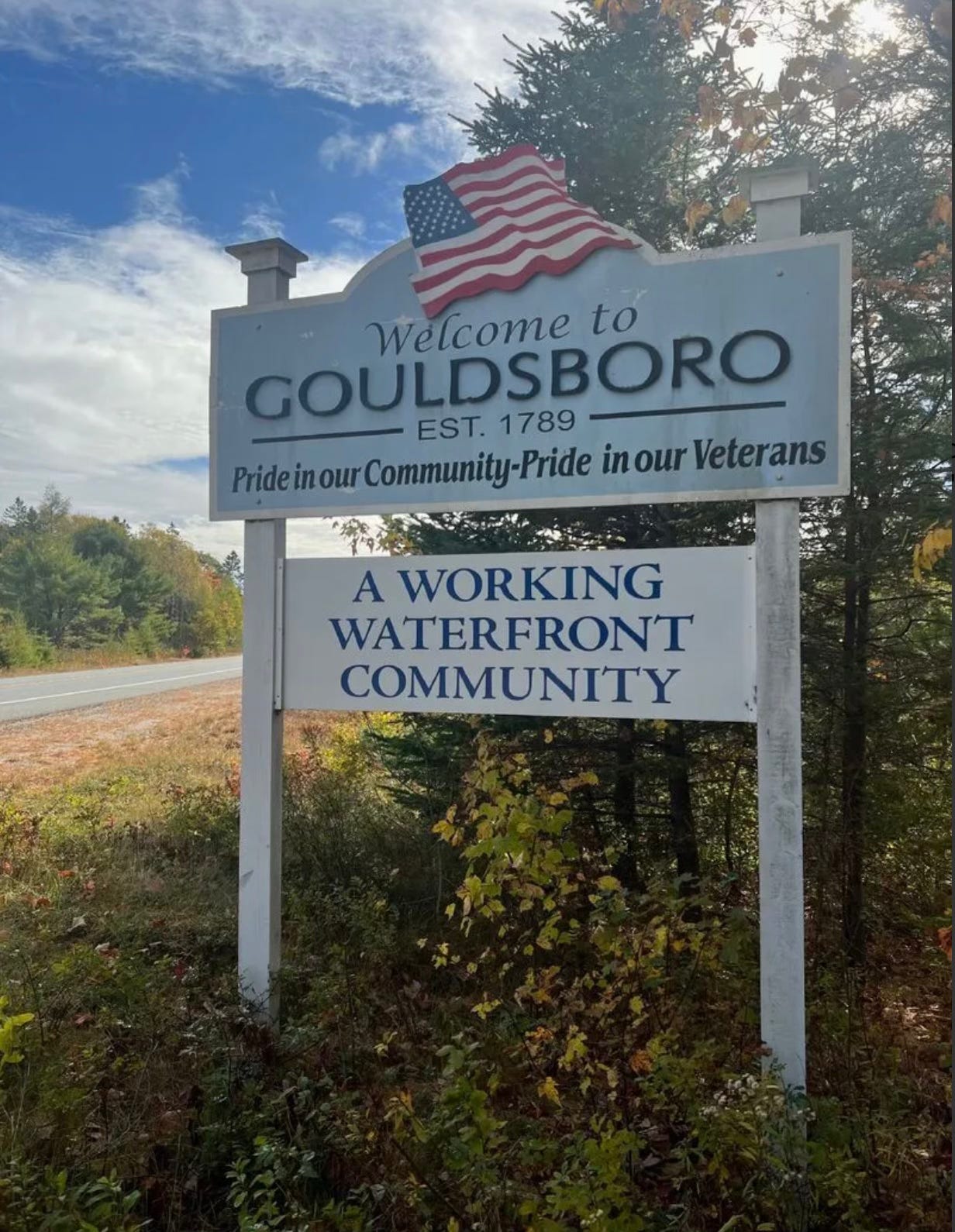
I visited rural Maine once, doing research in the hometown of a 1964 presidential candidate. The secretary of the candidate’s museum and library, who took a shine to me, guided me on a driving a tour of the neighborhood. The trailer parks and shacks reminded me of my image of the Mississippi Delta, only with white people. There are towns that look like that around Princeton, Illinois, too.
The sense that veteran and the loved ones who care for them—or, God forbid, mourn for them—are ignored by the dominant culture of the United States, because they come from places like this, despite the staggering pain those veterans endured in the service of the United States, is far more evident in the territory I’ve been perambulating on here for some six years now that I ever imagined it would be. Along the banks of the Illinois River, in the town of Marseilles, population 4,854, you can find a chintzier replica of the Vietnam Veterans Memorial in Washington D.C.:

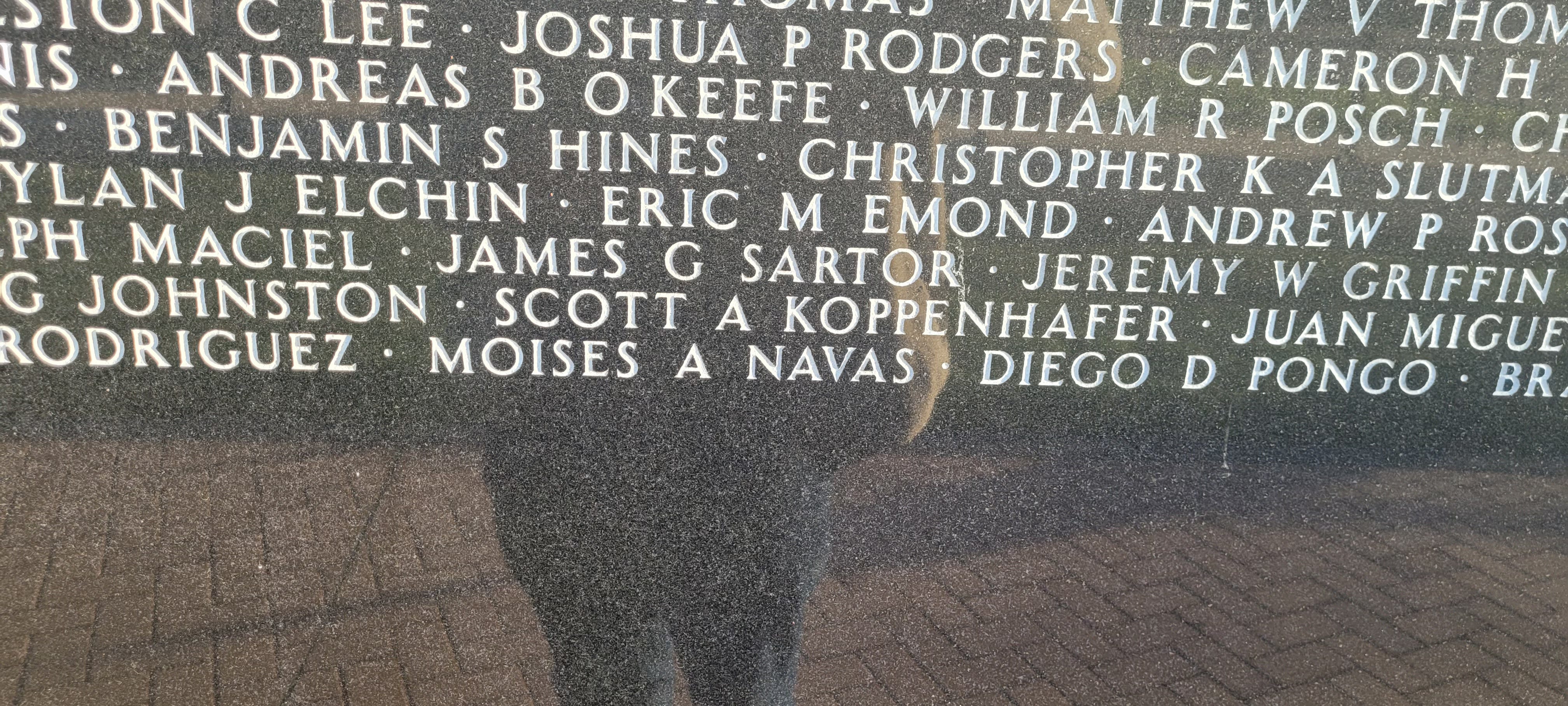

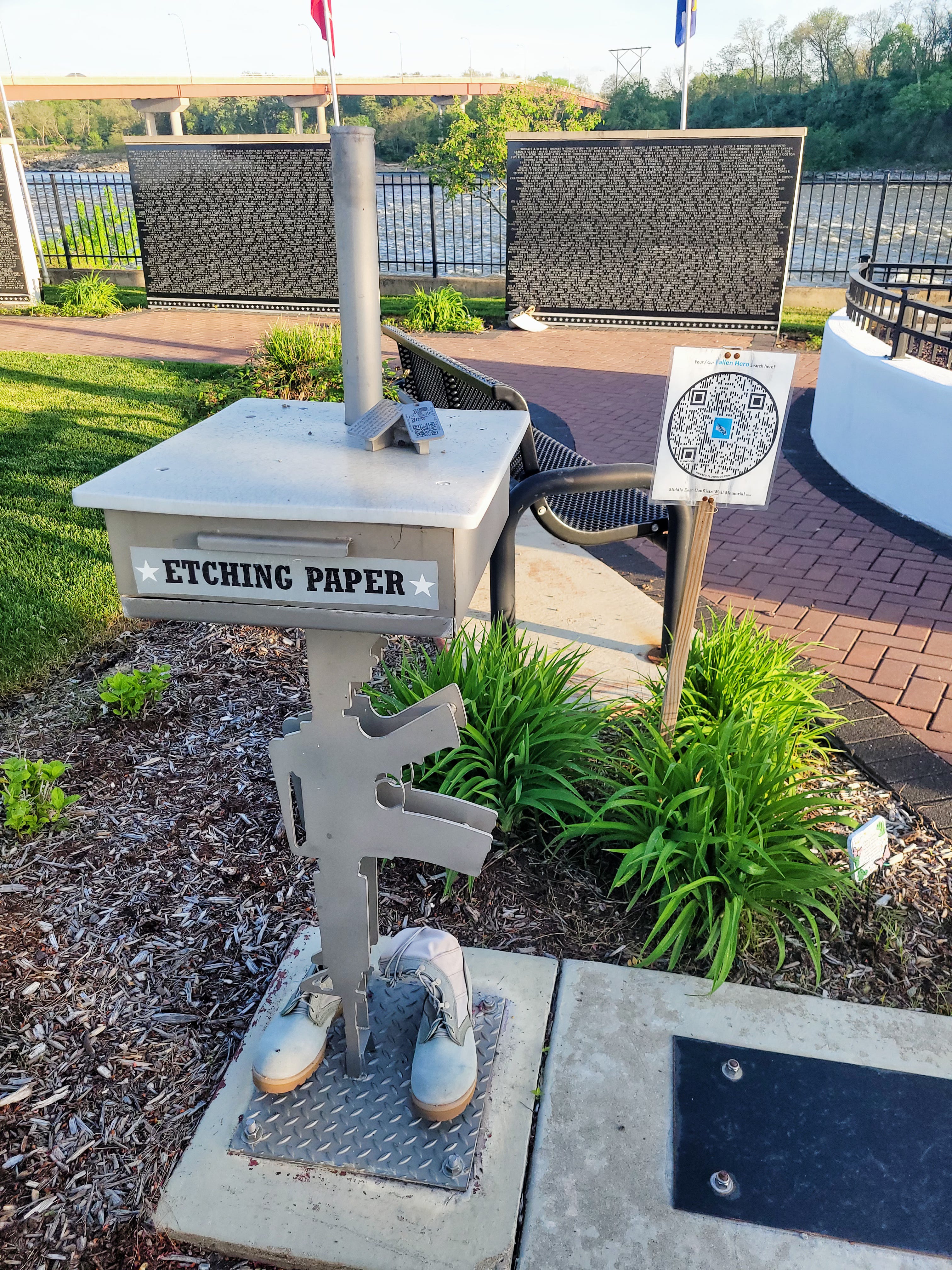

Not that far down the road, in busy Channahon State Park, there is a monument specifically dedicated to PTSD sufferers:

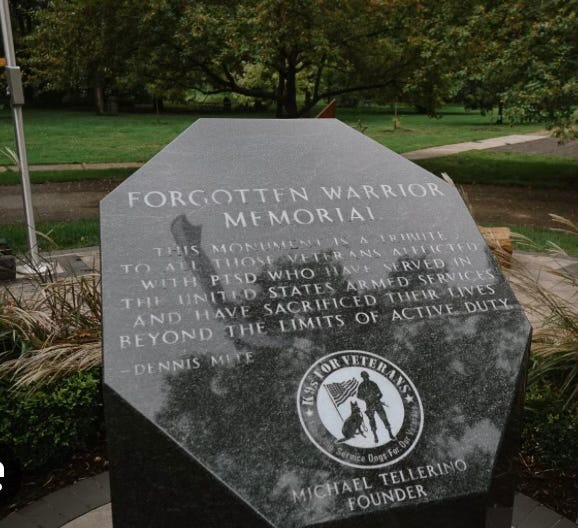
“PTSD,” right there in black marble, as prominent as the equine sculptures that used to honor generals in parks like that.
Those are just two installations I’ve stumbled across within forty miles of each another. Who knows how many more dot the country. Give this some thought when thinking about whether, in fact, the way in which Platner’s public presentation as a broken, healing, moral work in progress, in a place like Maine—where 8% of the population are veterans, fifth place among American states, territories, and districtss, behind Alaska’s high of 10.5% but far ahead of New York with 3.6% and, in second-last place, Washington D.C., with 3.2%—might be more of a feature of his electoral appeal than a bug. Eight percent of the citizens of a state, each one with who knows how many friends, family, and assorted love ones: that’s a lot of voters.
Recognition is a very powerful thing: in politic—one of the most powerful political forces of all. Platner is a symbol of that recognition. America’s agenda-setting elite political media is not making a big deal of that. Which is an instance of the way they are very bad at their jobs.
I drove by Bureau Junction, pop 281, (between Princeton and us, along rt29) today and thought about this piece.
Thank you for the fresh air on this topic. Posts like this are why I subscribe.